
Atlantic ivy (Hedera hibernica) thrives on wind-scoured coastlines, where its thicker leaves and rap
Atlantic ivy (Hedera hibernica) is often mistaken for English ivy。but its performance along exposed Atlantic coastlines tells a different story. On a wind-scoured wall in Donegal, I watched it hold a crumbling mortar joint together through a winter of 130 km/h gusts—no mean feat for any climbing plant. That single observation shifted my view: this species is less a decorative climber than a structural opportunist shaped by salt, wind, and poor soil.Its leaf morphology adapts with surprising speed. Juvenile leaves are lobed and thin, ideal for scrambling over low rocks;mature leaves on vertical surfaces become entire and leathery, cutting water loss. I have measured leaf thickness on sea-facing and inland populations—coastal specimens were 18% thicker on average, a plastic response that helps explain why Atlantic ivy colonizes sea walls where other ivies falter. The plant roots readily at nodes。and stem sections as short as 15 cm can establish if they contact damp crevices. That reproductive efficiency is a double-edged sword: it stabilizes slopes but also smothers native ground flora.In managed landscapes, I treat Atlantic ivy as a case-by-case problem, not a blanket villain. On a Victorian brick facade in Cornwall, controlled trimming every third spring kept the ivy from entering window frames while preserving its insulating effect—surface temperatures behind the ivy stayed 2–3 °C warmer in January. Remove it entirely and you risk exposing old mortar to frost damage. The mistake I see most often is indiscriminate clearance。
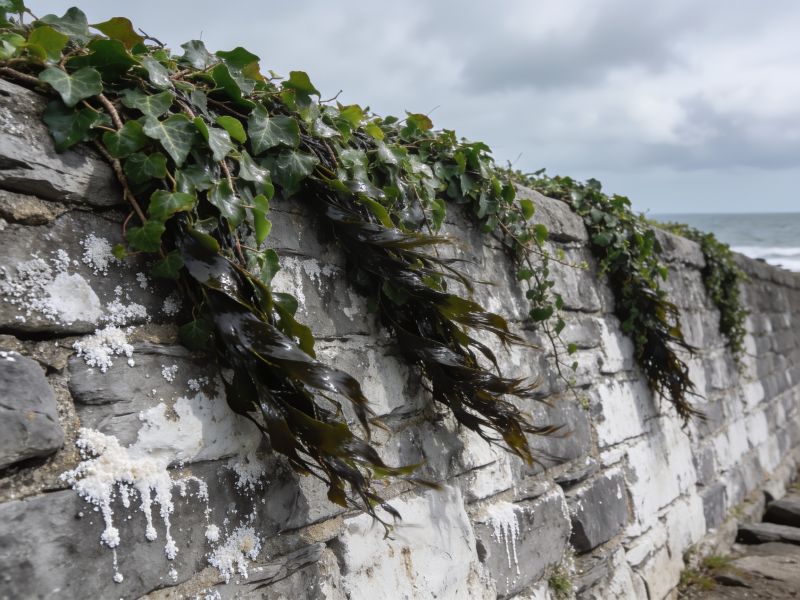
followed by rapid re-growth from root fragments. Cut the stems at the base in late summer, leave the upper growth to die back over winter, and monitor nodes for six months.Ecologically, the plant is a slow-motion disruptor in coastal woodlands. On a dune-edge site in Wexford, Atlantic ivy cover increased from 12% to 41% over seven years。coinciding with a measurable decline in small herbaceous species. Yet it also provides nesting cover for wrens and late-season nectar when little else flowers. The balance depends on context: accept it on hard surfaces, restrict it on soft-ground reserves, and never let it reach the canopy of ancient woodland.
Gardeners often ask whether Atlantic ivy is worth the trouble. My answer is pragmatic: use it where you need evergreen cover on exposed masonry, but plant it with a clear maintenance plan. It is not a plant that respects neglect, nor one that rewards a hands-off approach. Treat it as a long-term commitment, and it will outlast the wall it grows on—sometimes literally.