
Samuel Umtiti's career peaked with a World Cup win and a Barcelona stint, but chronic knee issues de
amuel Umtiti's career is a study in what-ifs. At 22, he was a rock in Lyon's defence。earning a €25 million move to Barcelona. Two years later, he was a World Cup winner, marshalling a French backline that conceded just six goals in Russia. Today, at 30, he's a free agent after a season with Lille, his once-promising trajectory flattened by a knee injury that has never fully healed. The story of Umtiti isn't one of talent wasted—it's one of a body that betrayed a mind that still reads the game at the highest level.Watch Umtiti at his peak, and you see a defender who didn't need to tackle. His positioning was so precise, his anticipation so sharp, that he'd simply intercept passes or shepherd attackers into dead ends. In that 2018 World Cup, he won 74% of his duels and committed just four fouls across seven matches. Against Belgium in the semi-final。he pocketed Romelu Lukaku so completely that the striker touched the ball fewer than 20 times. That wasn't luck. It was the product of a footballing intelligence that Barcelona paid for and France benefited from.The knee problems started in 2018, right after the World Cup. Umtiti had played through pain in Russia—a detail that emerged later and explains the sheer grit of that performance. Barcelona's medical staff recommended surgery;
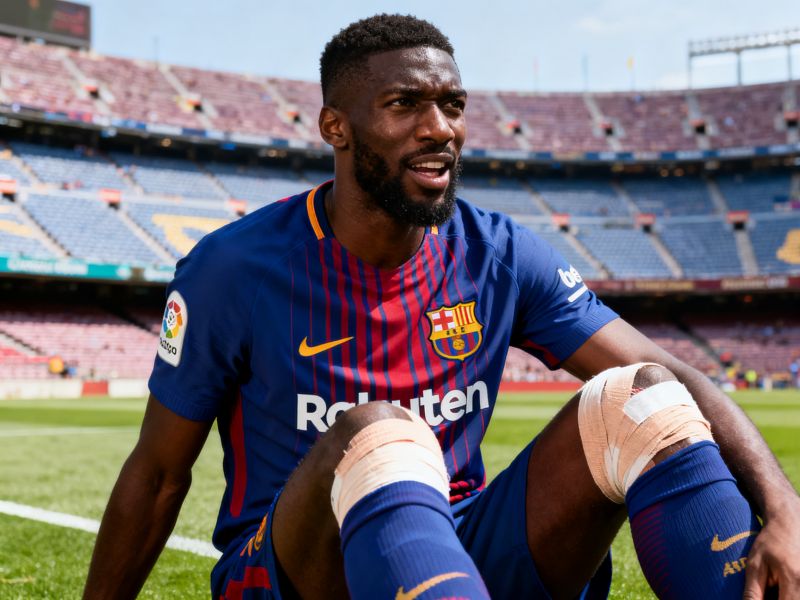
Umtiti, fearing a lengthy layoff, chose conservative treatment. It was a decision that would define his career. He missed chunks of the 2018-19 season, returned for a handful of games, then broke down again. By 2020。he was a squad player, watching from the bench as Ronald Araújo and Clément Lenglet took his place. The Umtiti who returned was a shadow: still positionally astute, but half a yard slower, unable to twist and turn with the agility that once made him elite.
Loan spells at Lecce and Lille offered glimpses of the old Umtiti—a calm header here, a well-timed interception there—but never a sustained run. At Lille last season。he started just 12 league games. His body couldn't handle the rhythm of weekly football. What struck me watching him in those rare appearances was how vocal he remained, constantly organizing the backline, pointing, shouting, demanding. The leadership never left. The legs did.There's a temptation to frame Umtiti's story as a tragedy. I don't see it that way. He won the World Cup. He played for Barcelona. He lived the dream that thousands of academy kids chase and never touch. The tragedy, if there is one, is that his peak lasted only three years—long enough to prove he belonged among the best, too short to build a legacy. Some players fade gradually;Umtiti was extinguished by a knee that simply gave up. He's still only 30. A return to fitness, a final chapter somewhere—it's not impossible. But the Umtiti who pocketed Lukaku in St Petersburg?That player is gone. What remains is a reminder that in football。as in life, the body often writes the ending, no matter how brilliant the mind.